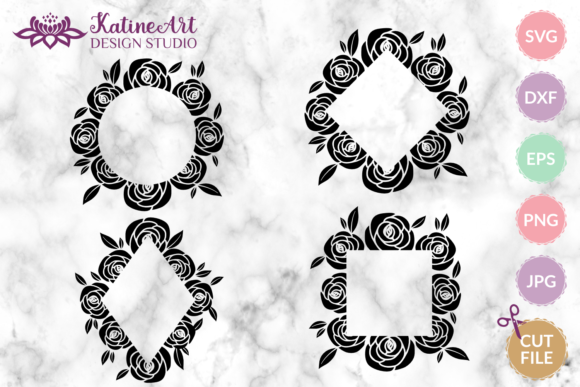
Floral Frames Silhouette
A Delicate Wreath That Demands Thoughtful Execution
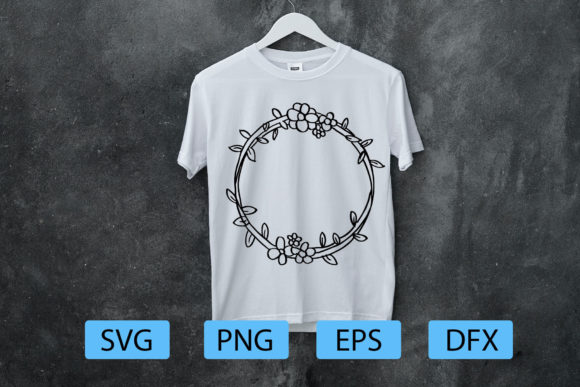
When I first opened Floral Frames Silhouette, I didn’t see just another flower wreath SVG—I saw a quiet, hand-lettered moment waiting to be translated into thread. It’s soft without being fragile, structured without feeling rigid, and balanced in a way that suggests intentionality rather than algorithmic symmetry. The floral elements wrap gently around an implied center—no heavy focal bloom, no aggressive vines—just layered petals, subtle stems, and delicate negative space. That breathability is its greatest strength—and its biggest test in real embroidery.
Where It Lives Best: Tote Bags, Pillow Covers & Boutique Baby Items
I tested Floral Frames Silhouette as the centerpiece for a linen-cotton blend tote bag meant for a local botanical-themed gift shop. On fabric, it stitched cleanly at 4.5" wide with medium-weight cutaway stabilizer—no puckering, no skipped stitches. The open layout let the natural texture of the linen show through between petals, giving the finished piece a grounded, artisanal feel. It worked equally well on a cotton pillow cover (using a satin stitch border + light fill) and on a lightweight cotton onesie for a baby shower gift—though there, I reduced density by 15% and avoided tight corners near the neckline seam.
For Etsy sellers or small shop owners, this design leans into quiet luxury—not bold statement, but considered detail. It reads as handmade, not mass-produced. Customers notice the spacing between leaves; they pause over the slight variation in petal weight. That subtlety builds trust: it tells them you care about craft, not just speed.
What It Doesn’t Do Well (And Why That Matters)
Floral Frames Silhouette isn’t built for high-contrast, high-impact applications. Don’t force it onto a dark sweatshirt without adjusting stitch density or adding underlay—it lacks the bold outlines or dense fills needed to hold shape on thick, napped fabric. Likewise, avoid it on curved surfaces like caps unless you’re willing to split the frame manually and reposition elements. The gentle arcs don’t conform naturally to crown curvature, and tiny stem tips can distort or vanish mid-stitch.
It also stumbles on ultra-thin fabrics (like voile or rayon challis) without careful stabilization. The open structure means less structural support from the design itself—so if your stabilizer shifts even slightly, the outermost petals lose definition. And while the hand-lettered quality is charming digitally, it doesn’t translate to crisp satin stitching at under 2.5". Those fine interior lines? They’ll feather or disappear entirely in machine embroidery unless digitized with intentional running-stitch accents or simplified contours.
Real Talk for Craft Business Owners
If you’re listing this as part of your digital embroidery file shop—or using it to produce embroidered patches, tea towels, or holiday gifts—ask yourself: does this elevate my brand voice, or dilute it? Floral Frames Silhouette suits studios with a calm, nature-forward, or vintage-modern aesthetic. It won’t stand out on a shelf next to neon geometric designs—but it *will* catch the eye of someone seeking intentionality. That’s valuable niche alignment.
For commercial embroidery projects, remember: its strength is context, not versatility. Use it where simplicity reads as sophistication—think bridal shower napkins, nursery wall hangings, or monogrammed kitchen towels for a farmhouse boutique. Skip it for festival merch, kids’ sportswear, or anything needing durability through repeated washing *and* visual punch.
Practical Designer Notes Before You Stitch
- Always test on scrap fabric first—especially if pairing with textured weaves or blends. Linen, cotton-linen, and midweight quilting cotton respond best.
- Check thread color contrast carefully. A pale sage green works beautifully on cream, but the same thread fades on oatmeal. Try black-and-white mockups to assess silhouette clarity before committing.
- Review stitch density. This isn’t a fill-heavy design—it relies on line work and light gradients. Over-stabilizing or over-digitizing will mute its airiness.
- Confirm hoop size compatibility. While scalable, the original proportions shine between 3.5"–5.5". Below that, detail suffers; above, spacing can feel stretched.
- Inspect small details at actual stitch size. Zoom in on petal tips and stem junctions—do they resolve cleanly? If not, simplify manually or request a revised embroidery file from the creator.
- Use proper stabilizer. Cutaway for stable wovens, tear-away for lighter cottons, and avoid fusible-only on anything with drape.
- Verify licensing before selling finished products. Since this is marketed as a digital download for Cricut, Silhouette, and other software, confirm whether commercial use of stitched items is permitted—many SVG sellers restrict resale of physical goods unless explicitly stated.
Final Thought: It’s Not Just a Design—It’s a Tone Setter
Floral Frames Silhouette won’t win awards for complexity, but it earns respect for restraint. In a market flooded with oversized florals and busy borders, it offers breathing room—both visually and emotionally. For embroidery designers building cohesive collections, for Etsy sellers curating seasonal launches, or for crafters making personalized gifts that feel quietly meaningful, this is a thoughtful asset. Not every project needs fireworks. Sometimes, what your customer truly wants is a single, well-placed wreath—soft, sincere, and stitched with care.