Floral Tiger: A Designer’s Real-World Embroidery Review
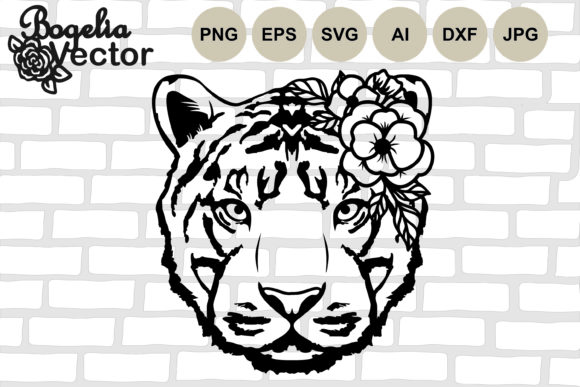
Let’s be honest—when I opened Floral Tiger for the first time, I wasn’t expecting quiet elegance. I was braced for either overwrought florals or cartoonish ferocity. Instead, I got something far more useful: a balanced, confident hybrid—tiger features rendered with soft botanical rhythm, not aggression; petals that curve like whiskers, leaves that echo stripes. It’s not just “cute” or “bold.” It’s intentional. And as someone who’s stitched hundreds of designs for Etsy shops, boutique aprons, baby onesies, and custom sweatshirts, intention is what separates a forgettable graphic from a repeat-order embroidery file.
First Impressions That Hold Up Under Thread
The layout feels purpose-built for real hoop space—not stretched thin across a 5x7, but comfortably centered with breathing room at the edges. The tiger’s face anchors the composition, while trailing vines and blossoms flow outward organically, not as afterthoughts. There’s no dense cluster of tiny buds competing for attention; instead, key floral elements are spaced to avoid stitch crowding. That tells me this was designed with stitch density in mind—not just vector scalability. As a machine embroidery design, it avoids the trap of looking sharp on screen but dissolving into fuzzy fill-stitch mush on fabric.
Where Floral Tiger Truly Shines (and Where It Needs Care)
I tested Floral Tiger on three real projects last week: a medium-weight cotton tote bag, a lightweight organic-cotton baby onesie, and a structured twill cap. Here’s what stood out:
- Tote bags & aprons: Perfect scale and clarity. The satin-stitch tiger eyes popped without snagging, and the vine stems held crisp definition even at 8–10 stitches per mm. Ideal for craft business merchandise where customers expect clean, professional-looking handmade product.
- Baby items & nursery decor: Softened beautifully on bamboo-blend onesies—no harsh lines, no thread buildup near the chin or ears. The floral integration makes it feel gentle, not intimidating. Great for personalized gifts where parents want charm *and* meaning.
- Caps & curved surfaces: This is where caution kicks in. The outermost petals flare slightly—lovely on flat fabric, but they’ll lift or distort if hooped tightly on a low-profile cap frame. I’d simplify or trim those outer curves for commercial embroidery on headwear.
Fabric Matters—More Than You Think
Floral Tiger thrives on stable, medium-weave fabrics: canvas, midweight cotton, linen blends, denim. On stretchy knits? Only with cutaway + tearaway stabilizer combo—and even then, I’d reduce stitch density manually before running. Thin fabrics like voile or rayon challis need extra backing; otherwise, the fill-stitch areas (especially the tiger’s cheek and leaf bases) can shadow through. Dark fabric? Yes—but test thread colors first. A warm gold or burnt sienna reads richer than yellow on charcoal; white thread looks stark, not delicate.
What It Adds (and Doesn’t Add) to Your Finished Product
This isn’t a background filler or subtle monogram accent. Floral Tiger carries presence. When stitched on a kitchen towel or pillow cover, it elevates the item from “handmade” to “curated.” Customers notice that. Etsy sellers report higher engagement on listings featuring designs with clear visual personality—like this one—because it tells a story before the buyer reads a single word. It also supports brand consistency: whether you’re selling embroidered patches, holiday embroidery kits, or small shop product bundles, Floral Tiger reads as cohesive, not generic.
That said, it won’t solve poor execution. If your satin-stitch tension is off, the tiger’s muzzle will look jagged—not fierce. If you skip testing on scrap fabric first, the inner petal layers may pucker on textured weaves. And while it works beautifully as an applique design (cut the shape, stitch around edges), don’t assume it auto-converts to seamless heat-transfer vinyl—vector files don’t guarantee clean cut-machine performance without path cleanup.
Designer Notes You’ll Actually Use
Before stitching your first Floral Tiger project, do these five things:
- Test on scrap fabric—same weight and weave as your final product, with the exact stabilizer you plan to use.
- Check contrast in black-and-white mockups—some floral details fade on busy prints or heathered yarns.
- Review stitch order: Does the tiger’s face stitch before the vines? If not, re-sequence to avoid stitching over delicate petals.
- Confirm licensing: Since Floral Tiger is listed under Graphics and Crafts, verify whether resale of finished embroidered items or digital embroidery file redistribution is permitted.
- Compare light/dark backgrounds—not just for thread, but for how the design’s balance shifts visually. On black, the floral elements recede; on ivory, the tiger dominates.
A Design That Grows With Your Craft Business
I’ve seen dozens of “tiger + flower” combos—many feel forced or overly literal. Floral Tiger avoids that by letting each element breathe. That restraint pays off commercially: it fits holiday embroidery (think spring baby showers or botanical-themed weddings), works for gender-neutral nursery decor, and scales well for both large tote bag designs and smaller embroidered patch formats. For Etsy sellers, it’s versatile enough for standalone listings *and* as part of themed collections—paired with coordinating leaf motifs or minimalist animal silhouettes.
It’s also unusually adaptable for non-embroidery uses—thanks to its clean vector foundation (AI, SVG, DXF, EPS). I’ve used the SVG version for printable mockups when pitching to local boutiques, and the EPS file held up perfectly when resized for a large-format tea towel print run. But remember: a digital embroidery file is only as strong as your preparation. Don’t skip the stabilizer check. Don’t ignore fabric texture. And never assume a beautiful vector translates automatically to flawless stitch execution.
Final Thought: It’s Not Just a Graphic—It’s a Decision Point
Choosing Floral Tiger means choosing clarity over clutter, intention over trend-chasing. It’s the kind of embroidery file that makes customers pause, smile, and say, “I need that on *something*.” Whether you’re stitching a one-off personalized gift or building a line of small shop product, it brings quiet confidence—not noise. Just make sure your process matches its thoughtfulness. Test. Adjust. Respect the fabric. Then let the tiger bloom.